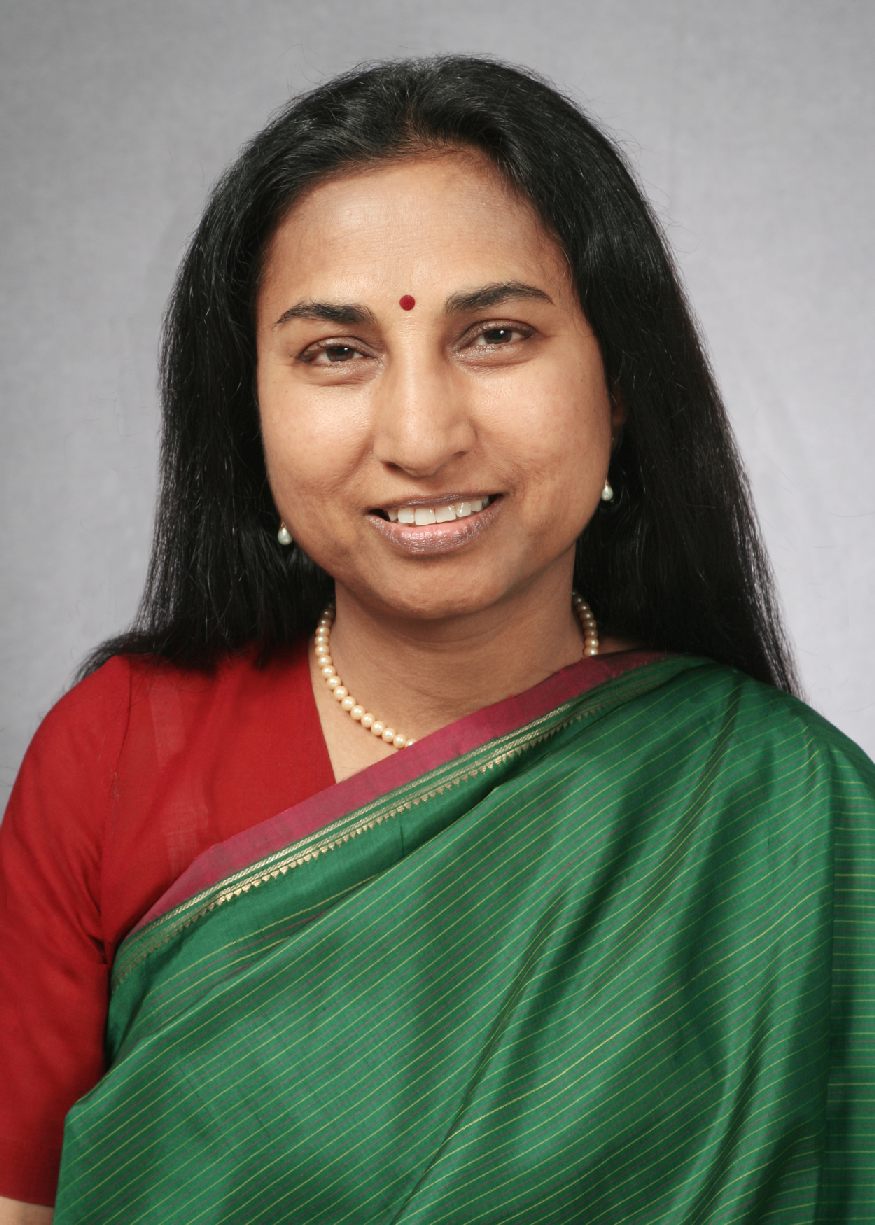
BINA AGARWAL teaches part time as Professor of Development Economics and Environment at the Global Development Institute, The University of Manchester, UK, and lives largely in India where her research projects are predominantly based. She continues to be affiliated with the Institute of Economic Growth at Delhi University, where she was earlier Director and Professor of Economics. Educated at the Universities of Cambridge and Delhi, she has held distinguished teaching and research positions at many universities, including Cambridge, Harvard, Princeton, Michigan, Minnesota (as the Winton Chair), and the New York University School of Law. She was Harvard's first Daniel Ingalls Visiting Professor and later a Research Fellow at the Ash Institute, Kennedy School of Government. She has also been a fellow of Radcliffe's Bunting Institute at Harvard.
Agarwal's research contributions cover both theory and empirical analysis, with a particular focus on the most disadvantaged. An economist with a keen interest in interdisciplinary and inter-country explorations, her publications include 13 books (authored and edited) and 86 academic papers. She writes especially from a political economy and gender perspective on diverse but interconnected subjects, such as property, land rights and livelihoods; environmental governance, sustainable development and collective action; agriculture, technology and food security; poverty and institutional transformation; legal change; and intersecting inequalities.
Her pioneering work on gender inequality in property and land, as well as on environmental issues, has had global impact. Among her best known works is A Field of One's Own: Gender
and Land Rights in South Asia (Cambridge University Press, 1994)
which was awarded the A.K. Coomaraswamy Book Prize 1996; the Edgar
Graham Book Prize 1996and the K. H. Batheja Award 1996. The jury of the Edgar Graham prize called it 'a superb analysis', 'a classic landmark work of reference', and a 'lasting milestone' that would benefit a vast segment of the world's disadvantaged women. Her writings placed the issue of women's land rights centrally on the agenda of governments, civil society groups, and international agencies, and the issue is now included in the UN's sustainable development goals.
In
her subsequent work, Gender
and Green Governance (Oxford University Press 2010), Agarwal explores the impact of women's presence on forest governance and conservation, empirically demonstrating positive outcomes on both counts. Endorsing the book, Nobel Laureate Elinor Ostrom wrote: 'Bina Agarwal has crafted a book of central importance in today's world. . With analytical rigour and originality, Agarwal bridges major gaps in our understanding of the difference women can make, when they are actively involved in forest governance.' Reviewers have praised this book as a 'tour de force', 'an extraordinarily rich mine of hypotheses and a model of careful testing', and 'a magisterial work of astounding erudition'. In 2016, Oxford University Press also published a three volume compendium of her selected papers, entitled Gender Challenges, which has been commended for its 'intellectual breadth, penetrating insightfulness, methodological firmness, and theoretical contributions'. Her writings have been translated into many languages. A volume of her selected papers was published in Italian by Il Mulino in 2021.
An original thinker and policy advocate, Agarwal brings to her work insights from both theory and field experience. In 2005, she spearheaded a successful civil society campaign for the amendment of the Hindu Inheritance law in India to make it gender equal. She also writes on policy matters for India's leading newspapers.
Agarwal
has been President
of the International Society for Ecological Economics, Vice-President of the International Economic Association, and President of the International Association for Feminist Economics. She has served on the Boards of many international organisations, including the Global Development Network, UNRISD (Geneva), the UN Committee for Development Policy (New York), and the Future Earth Science Committee. She is currently is a member of International Panel of Experts on Sustainable Food Systems (IPES-Food), and on the editorial boards of many academic journals. In 2016 she was elected an international member of the prestigious Accademia dei Lincei, Italy. She also holds honorary doctorates from the Institute
of Social Studies (the Netherlands), the University
of Antwerp (Belgium), and the University of Guelph(Canada).
Agarwal
has received many honours for her work. In 2002, she received the
Malcolm
Adiseshiah award for ‘Distinguished Contributions to Development
Studies’, and in 2005 the Ramesh Chandra award for ‘Outstanding
Contributions to Agricultural Economics’. In 2008, Agarwal
was honoured with a Padma
Shri by the President of India for her contributions to education;
and in 2010 she received the Leontief
Prize from Tufts University ‘for advancing the frontiers
of economic thought.’ She was also awarded the Order of agricultural
merit (officer) by the Government of France in 2016. And in 2017
she received the Agropolis
Louis Malassis International Scientific Prize for an ‘Outstanding
Career in Agricultural Development’, as well as the prestigious International Balzan Prize, 'for challenging established premises in economics and the social sciences by using an innovative gender perspective; and for opening new intellectual and political pathways in key areas of gender and development.'
Her latest awards include the 2023 Kenneth Boulding for Ecological Economics, from the International Society for Ecological Economics, USA; and the 2024/25 First Global Inequality Research Award from Sciences Po and World Inequality Lab, Paris School of Economics, France.
|